
I was actually a bit shocked when I posted on Facebook about my two new fosters in June 2024 and a friend praised them and said she followed a group for failed fosters. What? Letting the dogs down? And of course as everyone but me knew, failure is being unable to give them up and keeping them and is a Good Thing.
I’d lost a dog I loved very much before she’d even had the chance to slow down and grow old and prepare me for her going, when I’d always thought she’d be my last dog. I was even casting around for ways of securing her future if I pre-deceased her. This rambling eccentric old house was suddenly echoingly empty and it was unbearable. I decided that long-term I’d adopt an older dog but for the interim I would do emergency short-term fosters, a kind of payback for the years of love and company from the three rescue dogs I’d serially owned. For a couple of months, I said.
In the last year there have been six, two still with me. This blog is really for anyone thinking along the same lines, perhaps for similar reasons. Would I do it again? Should you do it? Aren’t rescue dogs from traumatic backgrounds half-crazed with fear and distrust? Don’t foster dogs get too attached (and you to them) to ever be given up? Isn’t it heart-breaking to hand over a dog that’s lived with you for months?
For starters, the choice is very nearly endless, especially in Spain where unwanted dogs in good health can by law no longer be put to sleep. Municipal pounds are crammed, rescue shelters are at capacity, charities at full stretch financially, and anyone prepared to help a dog through the transition from trauma to normality, ready for homing, can refuse dogs they think too big, too small, too wild, too damaged, too much, and still there are dozens, hundreds, to choose from. The safest are often older and have been abruptly orphaned , plunged into crowded cages and runs after a lifetime of privileged home life, until a new permanent home can be found, and you are offering only shelter and peace. You can leave the really challenging ones for experts and still change a dog’s life from despair to relief. Emotionally – it’s not unlike having visitors. You know they aren’t there forever, so you enjoy the time together very much and yes, miss the company when they go to a permanent place, but it isn’t devastating. There are tears, or there were for me, but not heartbreak. The ones with special needs – it is indescribable how it feels to help a dog through despair to trusting human beings again, ready to join a family of its very own.
Fostered dogs are owned by the charity that rescued them and the usual arrangement is that the charity covers vet bills and unexpected expenses, has absolute final say on any adoption arrangements, and will instantly take the dog back at any point if your circumstances change. If special diet or training is required, some charities offer more support. “Residencies” charge a monthly rate for keeping dogs in semi-confined conditions, giving them any medication necessary, and letting them slowly acclimatise.
I’ve had dogs from, or via, Valle Verde and Give A Dog A Home (GADAH) Malaga, and two from a charity which had to close (due to lack of funds rather than love of dogs and passion for their well-being). That’s an ongoing problem – so very many dogs (and cats) and so little money, so few homes.
I’ve said never again twice, (because of the tears, not because of bad experiences) then done it again, twice. I do think both my current ones are failed fosters, though. They are part of the fabric of my life now. Agoraphobic Kim – well, look at him now. He will probably always be shy.

Did that answer your questions? The rest is a self-indulgent memory-fest for the six fosters who have shared my life in the last year. All have had unique stories, not all traumatic.
Kim’s been around a year and celebrated his anniversary with a mini hike in the morning with his current foster sister AND a former foster sister, now adopted locally and extremely happy. We went out socially in the afternoon to a café to catch up with friends, and his anniversary supper included roast pork, something to which he is very partial. Not bad for a dog who took weeks to be coaxed out of determined self-imposed exile in the laundry, months to go out the front door on his first walk, who fled in terror when anyone entered the house, and literally crapped himself if they followed him to his bed. Progress has been slow but steady. Last weekend he and Carina came away on holiday with me to escape the local fiesta, which is heavy on fireworks and recreation of historic medieval warfare (moros y cristianos, muskets and swords and marching bands, huge fun unless you’re a nervous dog) and there were all sorts of challenges to face. Entering a strange house – charging about off-lead in a totally strange place in the middle of nowhere (no fences, just miles and miles of rural Spain) – new routines. He loved it. By the second day he was going into the house under his own steam (ok, diving straight under the table and staying there, he’s still Kim), by the third, he was doing his own very special dance of welcome when our host emerged outside with cups of coffee. Neither dog went far without me but both begged for constant walks when we went outside. He’d vanish into the distance, appearing in under a minute when I turned back. He’s still to bark at home when the doorbell rings (at least he no longer disappears at speed into the safety of the bedroom) but on holiday he growled and barked at a distant dog which decided not to investigate after all.
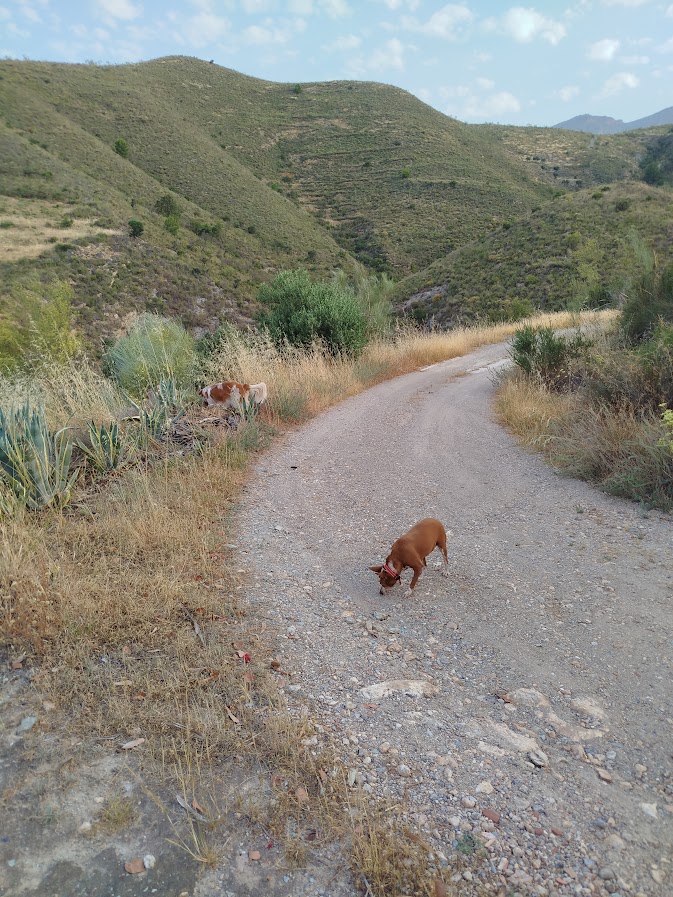
Kim and Carina exploring in the campo

Carina
Carina is the sixth foster, a very dainty older podencohuahua (there’s a big dollop of Chihuahua in there) who has been here a couple of months and is permanently joyful, putting aside her fairly horrible past and focusing only on the here-and-now, always up for the adventures of the day. Even when they are as mundane as housework or taking rubbish to the big street bins, she’s in. Her huge maimed ears are up at the faintest sound, her tail permanently ready to wag, and she adored, and was adored by, my visiting toddler granddaughter.
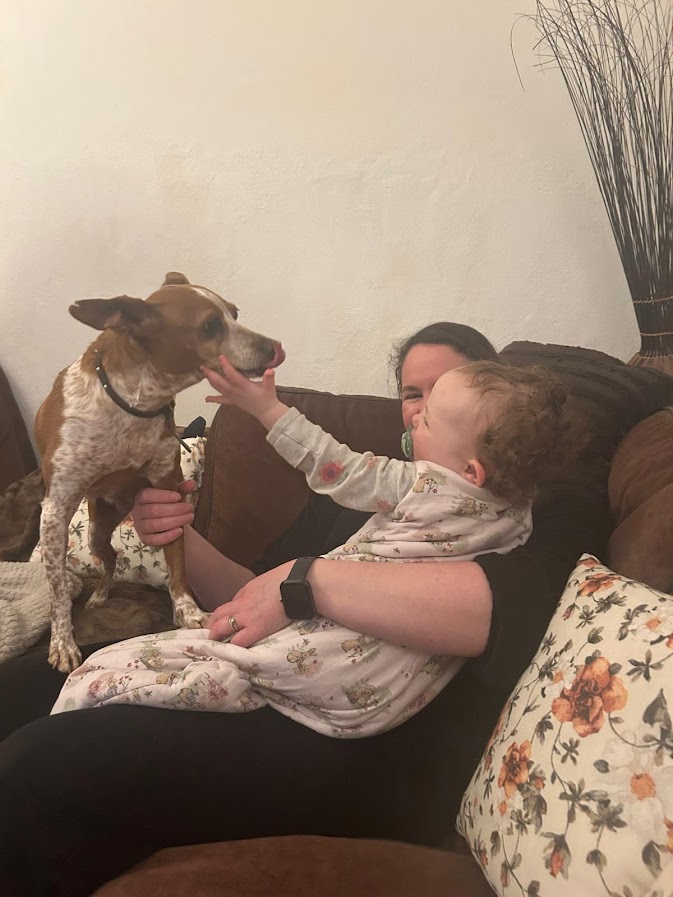
Carina meets a human her very own size
She enjoys company generally but a human her own size delighted her. She’s very special, very ready to go to a forever home, and yet the thought of her going . . . well, there are tears every time one goes to their own forever home, but Carina and Kim between them have become perfect companions. We’re all reddish and freckled, all three tolerant of our very separate ways, all rubbing along together. I’ve been spoiled by Blanquita (now Chica) finding her happy home just around the corner and meeting her often, so a perfect home for Carina would have to be local, and loving, and special.
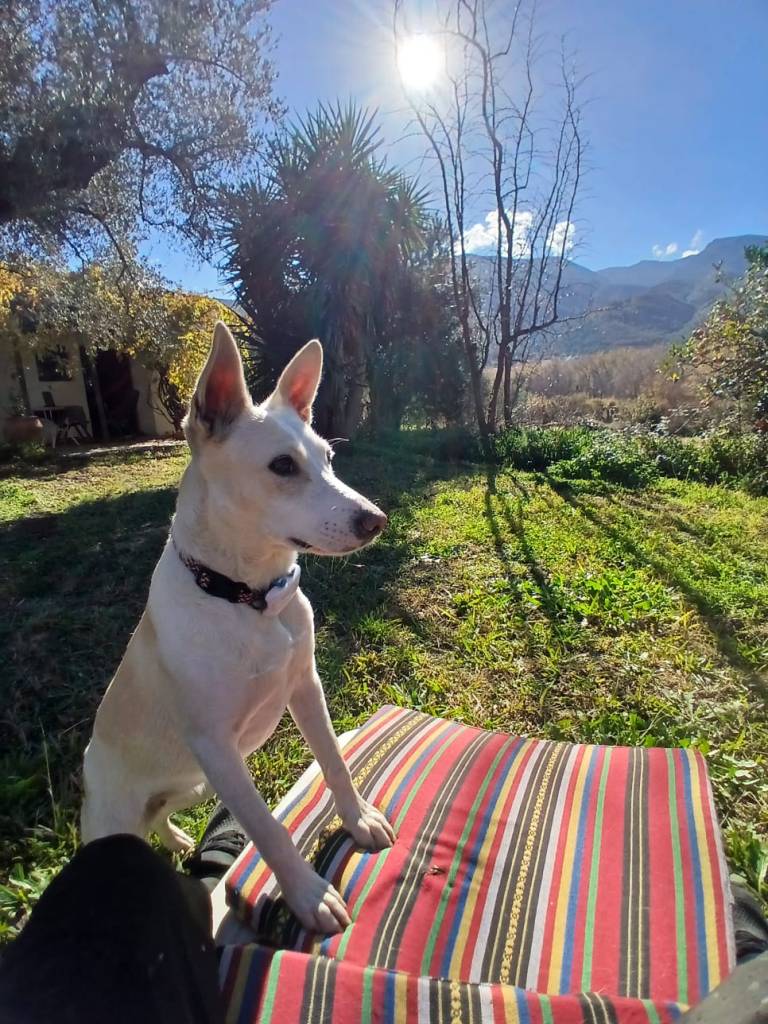
Leia – the first foster
Leia, the very first foster (by 2 days) of them all, rescued from a horrible existence in a cage with rare visits from an indifferent owner (who should be stuck in a cage for a year too, fed twice a week, but hey, just my opinion) went to the wrong owner first and that was devastating, but then found the place perfect for her and is utterly happy now, living her best life.
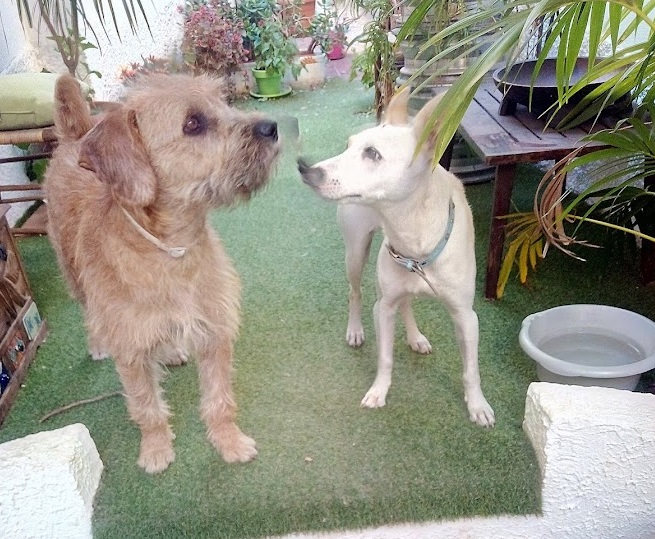
Dobby and Leia
Dobby, adopted from a pound, was only ever on loan while his owner was recovering from some bad luck, and I follow his adventures on Facebook, and he’s grand, hiking socially several times a week for amazing distances, and loving his life. A super dog who took both Leia and Kim in hand and coached them in being dogs.
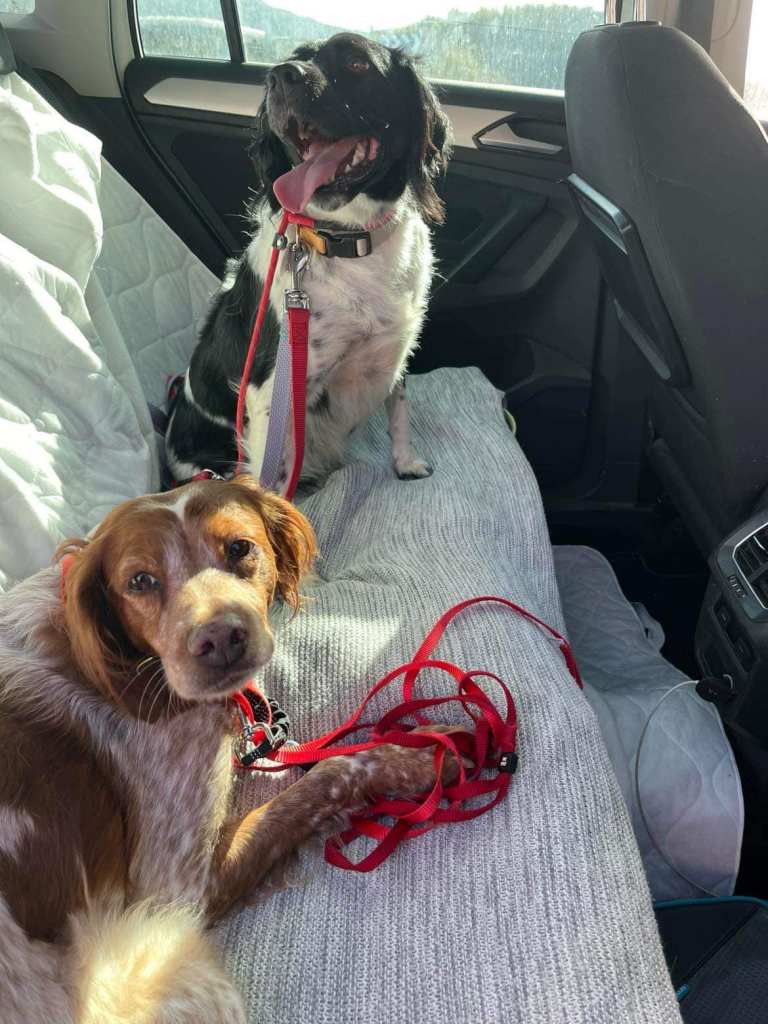
Bonnie on the day she left and became Mia
Bonnie, a Breton spaniel who was formerly briefly Prima and is now Mia, was Kim’s favourite – he’s half Breton spaniel (a Breton Collie, we call him) and worshipped her from day one, following her about like a puppy (he and Carina get on, but are not inseparable). She wasn’t a horror story – handed in by her hunter owner when she slowed down, just needing to adapt to living in a home, which she did effortlessly. We get occasional updates via WhatsApp about Mia – she’s I think the oldest of the lot but enjoys a happy active life living a few hours away with another rescued Breton spaniel and photos are usually of her looking smug on the sofa. I deliberately chose this one of her leaving for her new life – there was no distress.
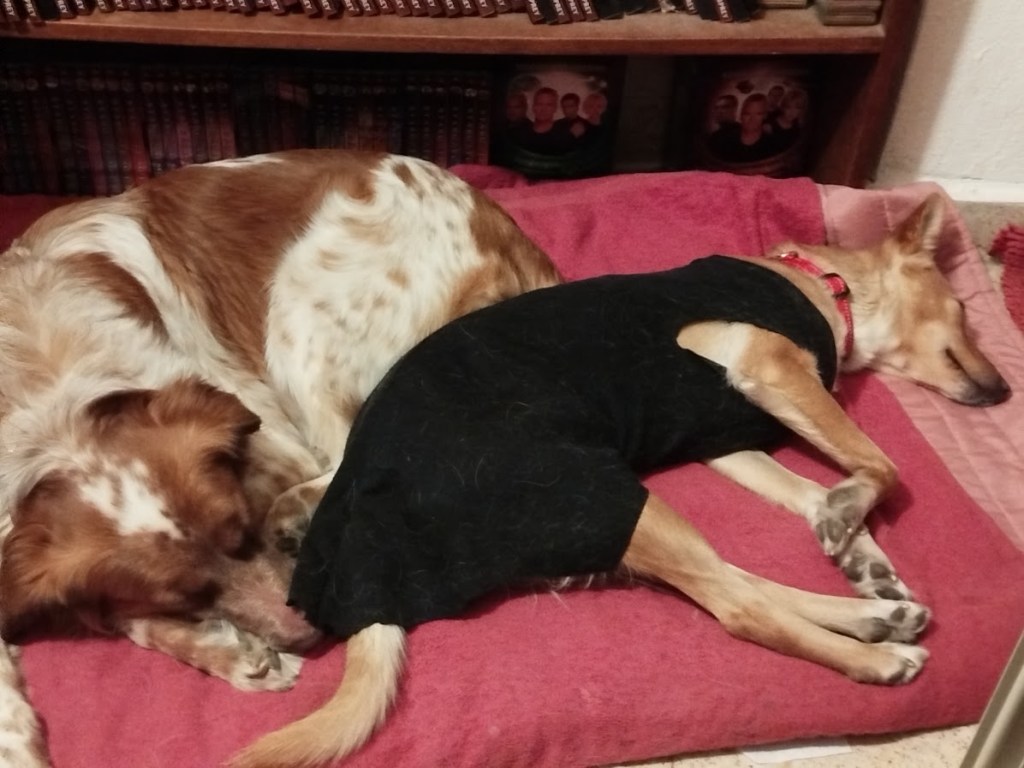
Blanquita and Kim preferred to share in cold weather
I said at that point no more fosters, too many tears when they left, but Blanquita, a podenco maneto dumped at a petrol station, living wild for a year while she waited for her faithless owners to return, fed by the kind staff at the petrol station shop but refusing to be caught, was an emergency after she was attacked by a pack of hunting dogs and badly injured. Kim took an active part in her recuperation and reintroduction to normality, even gulping down his fear to go on walks to encourage her, gentle and protective. She became Chica and they are always delighted to see each other – she visits if her owners have to leave her alone for longer periods, and she and Carina play while Kim watches benignly.
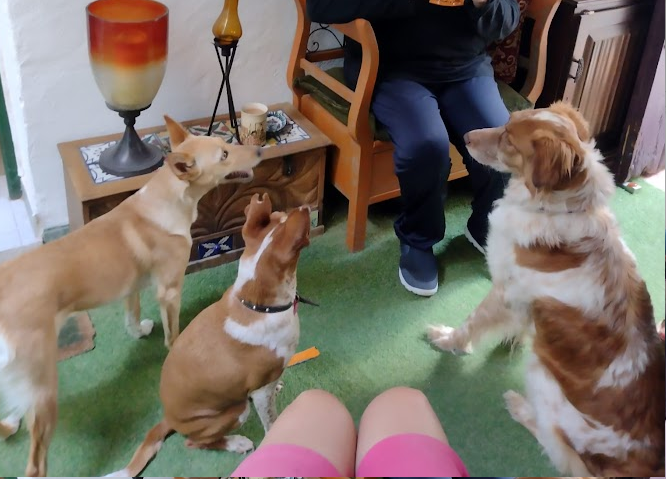
Chica visiting Carina and Kim – treats? Really? Ooh
Six special dogs. No regrets.

 Quite Contrary