
I have tried to keep the following cool and unbiased, presenting just the points. I grew up in the system, voted for its abolition, and struggle to understand it in context. This blog may raise more questions than it answers – it did for me.

Apart from a brief period during the latter part of the 2nd world war, when the USSR became one of our Glorious Allies, the Western world’s attitude to Communist Russia was one of deepest suspicion and alarm. The Glorious Alliance didn’t last long, and the Cold War started in 1947. It would last until 1991.
The USSR was the world’s largest supplier of gold, diamonds and minerals – which are all needed for industrial purposes. Whatever the cost, the Western world’s biggest source of gold, diamonds and minerals at that time – South Africa – had to be kept capitalist.
Whatever the cost.
Never let anyone tell you that your government didn’t know about, or support, apartheid. It was an unofficial social policy in many countries in the world in the late 40s and in some countries remained so into the 60s. (The sign used is, as can be seen by the spelling, American.) Jan Smuts, who led the country through WW2, was set to create a strong black middle class, entrenching capitalism and financial empowerment so thoroughly that when the entire population did start voting, the country wouldn’t be turned into the latest state of the USSR. As it happened, his party lost the next election and the National Party took power in South Africa in 1948, promptly turning apartheid from social policy into law. It is possible there was relief in the international corridors of power – the Nats may have hated the English with a passion that dated back to the atrocities of the concentration camps of the Boer war, but they had no hostility to the other western powers and were profoundly right wing. Communism would get no foothold, it was safe to believe, while they were in control.
They stayed in power until 1994. Just give a second ‘s thought, here, wherever you live, to what it would be like to have the same political party in power for 46 years. No left wing vs right wing shifts in policies. No bowing to political winds of change. No campaign promises broken after election. The press reporting that all was well. One strong party, voted in every four years with a safe majority by a trusting population. Remarkably little corruption, under what must have been tempting circumstances, if compared to the corruption rife in governments that last less than a quarter of that time. Six leaders, in 46 years. One steady, even fatherly, government which was leading South Africa ever onward into prosperity and success.
The prosperity and success was largely white. By the late 1950s observers were increasingly concerned to see that far from steady empowerment, the black section of the population was no further forward than it had been. Other races in SA were thriving, and bang on track, and the country itself was doing very well. Employment was high, everyone was housed, fed, basically educated, morale was good, progress was – not. It was the height of the Cold War. Western world governments needed South Africa to remain capitalist, but also needed to be seen to be protesting for more progress. Pressure had to be seen to be applied. The Nats took South Africa out of the Commonwealth in 1961.
Black activist groups were using Russian weapons and equipment in growing urban terrorism. The SA communist party, along with other fledgling parties that wanted majority rule, were banned. Nelson Mandela, high profile urban terrorist, deputy leader of the ANC and co-founder of the militant Umkhonto we Sizwe, who had been nicknamed the ‘Black Pimpernel’ and had evaded capture for years, was finally caught. He was tried for arranging fatal bombings on civilian targets, and sentenced to life imprisonment in 1962. It didn’t stop the terrorism, but harsh controls drove it further underground.
By 1970 apartheid, even as a social policy, was phased out of Western society, and activists were turning their attention outside their own countries. In South Africa progress took another huge step backward, with the abolishing of non-white representation and the creation of ‘homelands’ – meaning most black citizens lost their South African citizenship, retaining only the rights of migrant workers. It was an ultimately unsuccessful first attempt to end white-only voting, by removing the majority of black voters. Membership of any banned party was treasonable and martial law was frequently invoked.
Looked at now, with cool hindsight, it seems incredible that the Nats, representing barely 10% of the country’s population, were still backed by the majority of the voters. To put it into perspective – the country was thriving, employment was high, and countries that were telling South Africa what to do were in worse shape themselves. Immigrants were, in fact, flooding in, from other countries in Africa, and also from the strike-torn faltering UK. The immigrants couldn’t vote, but they could stay and find work in a thriving economy.
When a man is employed, fed, and housed, the urgent desire to vote, to use a lavatory or a hospital or a school marked ‘whites only’ when there is another nearby marked ‘blacks only’, to potentially improve things for his children but only at extreme personal risk, isn’t that urgent. Indignation is powerful, but when to protest is a threat to life and liberty, it usually dies into resentful resignation. The Western governments knew that nothing could change while things were bearable under the status quo. By now under serious public pressure to counteract a situation created nearly 30 years earlier under a hidden agenda, they called for sanctions, which started to bite deeper and deeper. International companies started pulling out of South Africa – banks, car manufacturers, major employers. Unemployment rose dramatically, and brought suffering, crime and social unrest.
Prime Minister – later State President – Vorster held his ground, even with an increasingly restive voting population, but from the early 1980s, under PW Botha, progress finally began on the original brief, to encourage the growth of an economically-strong black middle class. In 1989 FW de Klerk took over as State President, mended some very old fences with Thatcher’s UK, and eventually released Nelson Mandela. He had already lifted the ban on the ANC and other banned parties, including the SA communist party.
In December 1991 the USSR was dissolved, ending the Cold War and largely signalling the end of the threat of communist dominance in the western world.
Only months aftewards de Klerk called for a referendum. Is it, he asked the white-only voting population, time to give the vote to all? The answer was an emphatic yes. At the following election the ANC swept into office with a staggering majority and has stayed in power ever since.
Was the communist threat real? The very possibility changed the lives of millions.
If the Soviets had controlled 90% of the world’s supply of industrial diamonds and minerals for the second half of the twentieth century, would the ‘free world’ be a different place now? In how many ways?


 ife. The story supplied a generic female friend, a lovely big Scottish flirt safely behind a zimmer, a bitchy gay man from her own opera background for fun (she adored gay men, and they her) and, as a friendship accelerator, a couple of murders to solve. It was soothing for me to place her somewhere she could be telling her hilarious stories and enjoying herself – well, forever.
 nly thing I really clearly remember about this day – I was four – was that I got to hold a tame cheetah cub and have been hopelessly addicted to cheetahs ever since, but the story has been told so often, and by so many different family friends, I re-tell it with confidence.
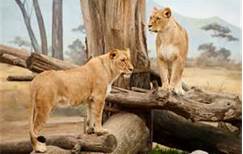 o join the party. The guests promptly attempted to get behind the little bar, climb one of the few spindly thorn trees, sprint in the direction taken by the rangers in the land rovers, or cram themselves into the small catering truck which represented the only other refuge. My mother looked round anxiously – to see me, on my own, completely unaware of the new arrivals, and raptly contemplating the desserts buffet. She darted across, swung me up onto the buffet, climbed up herself, grabbed a tray of raw steak and started flipping prime sirloins towards the advancing lionesses. Apparently they entered into the spirit of things with grateful enthusiasm and she had nearly emptied the tray by the time the hastily-summoned rangers hurried up to herd them away, now completely without ceremony, to their new lives. I had made nearly as many inroads on the chocolate eclairs and was completely unaware of any drama.
 Quite Contrary